
Supporting Confidence and Independence Through Risky Play

At first glance, the term “risky play” can sound a little scary. As adults, our instinct is often to step in, protect, and prevent anything that might go wrong. But a healthy amount of managed risk is not only safe but it’s a powerful tool for helping children develop confidence, independence, and problem-solving skills that will stick with them for years.

What is Risky Play?

Risky play doesn’t mean letting children do anything dangerous. Instead, it’s providing safe opportunities for them to test their limits. For example, climbing, balancing, running fast, exploring tools, navigating uneven ground, experimenting with heights, or trying something they’ve never done before. These experiences help children learn what their bodies are capable of and how to make smart decisions.

Why it matters

  • They build confidence. Each time a child tries something new, they discover that “I can do hard things.”

  • They develop independence. Knowing that adults believe in their abilities encourages children to trust themselves.

  • They grow problem-solving skills. Risky play teaches children to plan, adjust, try again, and think ahead.

  • They strengthen physical skills. Balance, coordination, spatial awareness, and strength all grow through active exploration.

  • They learn boundaries. Children become better at assessing what feels safe and what doesn’t when they get to practice making decisions.

Our Role

We don’t step back, we step beside. Instead of removing all challenges, we can work to provide:

  1. A safe environment with natural challenges

  2. Supervision that supports not controls

  3. Language that encourages thinking (“What’s your plan?” “How does your body feel?”)

  4. Opportunities to try again without fear of failure
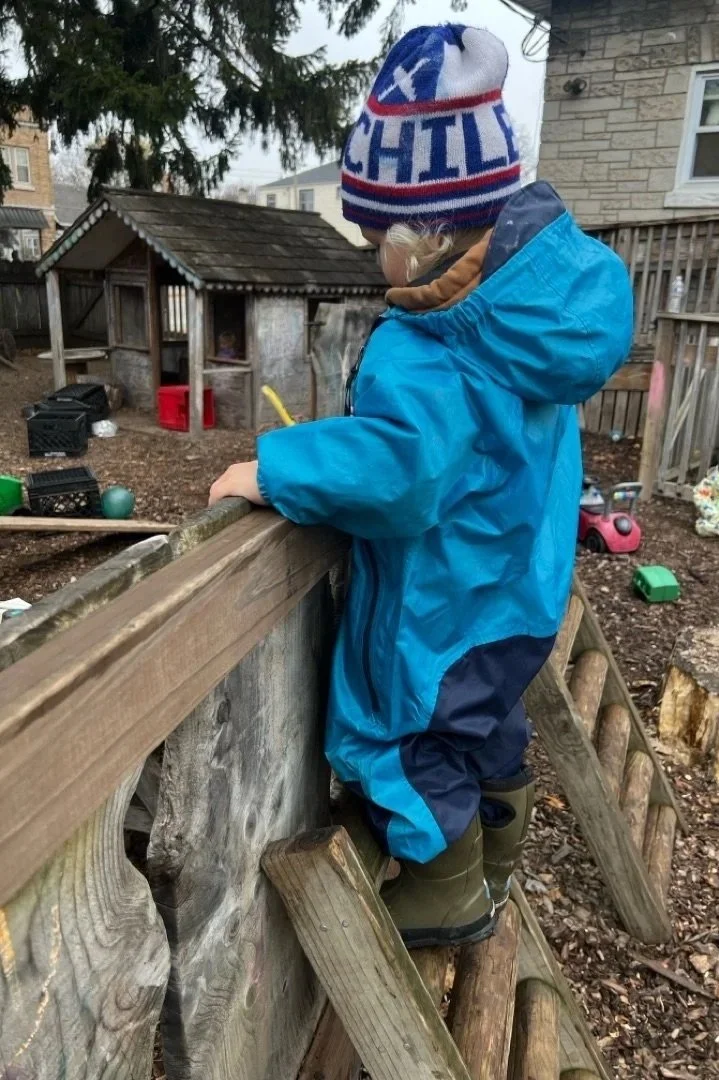
When children know that we are there to guide them, they’re more willing to take on challenges. Ultimately, risky play helps children grow into capable, resilient learners. When we allow children room to explore, experiment, and make small mistakes, we show them that we believe in their abilities. They carry that confidence into school, friendships, and every new challenge they meet.

Supporting risky play is supporting independence, self-trust, and a lifelong love of learning.

Classroom Feature-Center Floats

Float Staff at Nestling House

This week we’re featuring some amazing members of our team: , Miss Donna (Herman), Miss Raven (Howell), Miss Neeliya (Howell), Miss Grace (Howell/Herman), and Miss Mary (Howell)!

As float teachers, they step into any classroom that needs support and they do it with patience, love, and so much heart. Whether they’re comforting a little one who needs a moment or helping a classroom transition go smoothly, they bring a sense of calm and positivity everywhere they go.

Our float staff support every age group at our locations, making sure each classroom feels cared for and each child gets the attention they deserve. Our program simply wouldn’t run as smoothly without them, and we’re so grateful for the teamwork, flexibility, and kindness they show every day.

Help us give a big “thank you!” to these wonderful educators who help make Nestling House feel like home.

Welcome Back to Nestling House

Welcome back to Nestling House, 2026 is finally here! We’re excited to welcome our families, old and new, back after the holiday break.

As we settle into January:

  • classrooms are reopening with familiar routines

  • children are reconnecting with friends and teachers

  • our outdoor spaces are ready for fresh winter play

We’re looking forward to a year filled with community, joy, and everyday moments that matter. Thank you for being a part of Nestling House ], we’re so glad you’re here, and we can’t wait to begin 2025 together.

Winter Break

As the year comes to a close, we want to take a moment to celebrate all the growth, laughter, and learning that filled our classrooms in 2025. It’s been a wonderful year of discovery, connection, and community. We’re beyond grateful to have been able to share it with our amazing families.

Both Nestling House locations will be closed for Winter Break from December 24th through January 1st. During this time, our team will rest, recharge, and spend time with loved ones as we prepare for another exciting year ahead.

Also, the new year brings an exciting change, Ella will be stepping into the role of Director at our Herman location! After serving as Assistant Director and training under Lindsay, she’s excited to continue supporting our staff, families, and children in this new position. Many of you already know her, and we’re thrilled to see her leadership and care guide Nestling House into 2026.

We wish all of our families a warm, safe, and joyful winter break. Thank you for being part of our Nestling House community and we can’t wait to see everyone on January 2nd!

Tips for Cooking with Kids

Inviting children into the kitchen isn’t about perfect recipes, it’s about connection, confidence, and joyful learning. When we slow down and let children help, we support independence, problem-solving, and a lifelong positive relationship with food. With Winter Break coming up quickly, here are simple ways to make cooking with kids meaningful and stress-free:

1. Start with Achievable Tasks

Young children thrive when they feel capable.

  • Washing produce

  • Stirring batter

  • Tearing lettuce

  • Scooping and pouring

2. Offer Choices to avoid Chaos

Instead of asking, “What should we make?” try:

  • “Bananas or strawberries?”

  • “Would you like to stir or sprinkle?”

Small choices support autonomy while keeping the process calm.

3. Focus on the Process, Not the Outcome

Flour will spill. Batter will be lumpy. That’s learning. Try narrating what’s happening:

  • “The dough feels sticky, what do you notice?”

Children build sensory awareness, language, and confidence when the goal isn’t perfection.

4. Slow Down and Make Space

Cooking takes longer with little helpers and that’s okay!

  • Start when you’re not rushed

  • Prep a few ingredients ahead

  • Keep steps short and predictable

5. Invite Exploration Through the Senses

Sensory play supports curiosity and self-regulation. The kitchen is a natural classroom:

  • Smell herbs

  • Touch soft vs. crunchy

  • Listen to sizzling

  • Observe colors changing

6. Use Real Tools, Safely

Children are more careful when trusted, teach skills slowly and model safety without fear-based language.

  • Child-safe knives

  • Small whisks

  • Non-slip bowls

  • Step stools with support

7. Celebrate Effort, Not Appearance

Skip “That looks perfect!” and try:

  • “You worked hard to mix that.”

  • “You kept trying even when it was tricky.”

Cooking with kids is less about the recipe and more about the relationship. When we invite children to participate, we communicate: you are capable, you belong here, and your contribution matters.