
At first glance, the term “risky play” can sound a little scary. As adults, our instinct is often to step in, protect, and prevent anything that might go wrong. But a healthy amount of managed risk is not only safe but it’s a powerful tool for helping children develop confidence, independence, and problem-solving skills that will stick with them for years.
What is Risky Play?
Risky play doesn’t mean letting children do anything dangerous. Instead, it’s providing safe opportunities for them to test their limits. For example, climbing, balancing, running fast, exploring tools, navigating uneven ground, experimenting with heights, or trying something they’ve never done before. These experiences help children learn what their bodies are capable of and how to make smart decisions.
Why it matters
They build confidence. Each time a child tries something new, they discover that “I can do hard things.”
They develop independence. Knowing that adults believe in their abilities encourages children to trust themselves.
They grow problem-solving skills. Risky play teaches children to plan, adjust, try again, and think ahead.
They strengthen physical skills. Balance, coordination, spatial awareness, and strength all grow through active exploration.
They learn boundaries. Children become better at assessing what feels safe and what doesn’t when they get to practice making decisions.
Our Role
We don’t step back, we step beside. Instead of removing all challenges, we can work to provide:
A safe environment with natural challenges
Supervision that supports not controls
Language that encourages thinking (“What’s your plan?” “How does your body feel?”)
Opportunities to try again without fear of failure
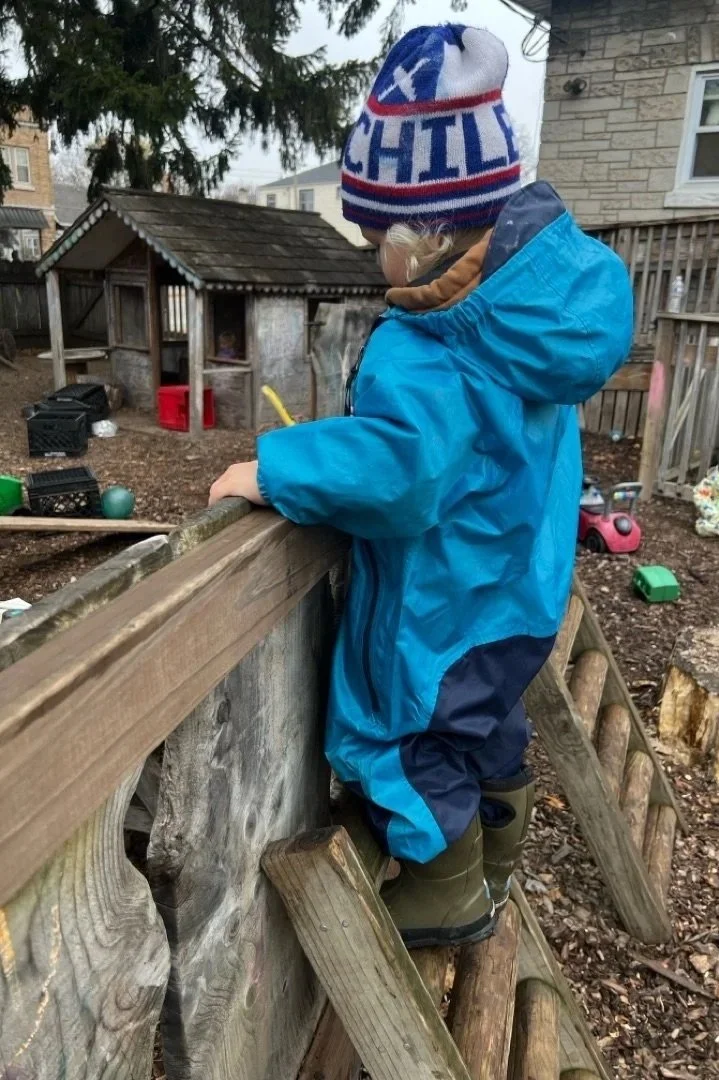
When children know that we are there to guide them, they’re more willing to take on challenges. Ultimately, risky play helps children grow into capable, resilient learners. When we allow children room to explore, experiment, and make small mistakes, we show them that we believe in their abilities. They carry that confidence into school, friendships, and every new challenge they meet.
Supporting risky play is supporting independence, self-trust, and a lifelong love of learning.